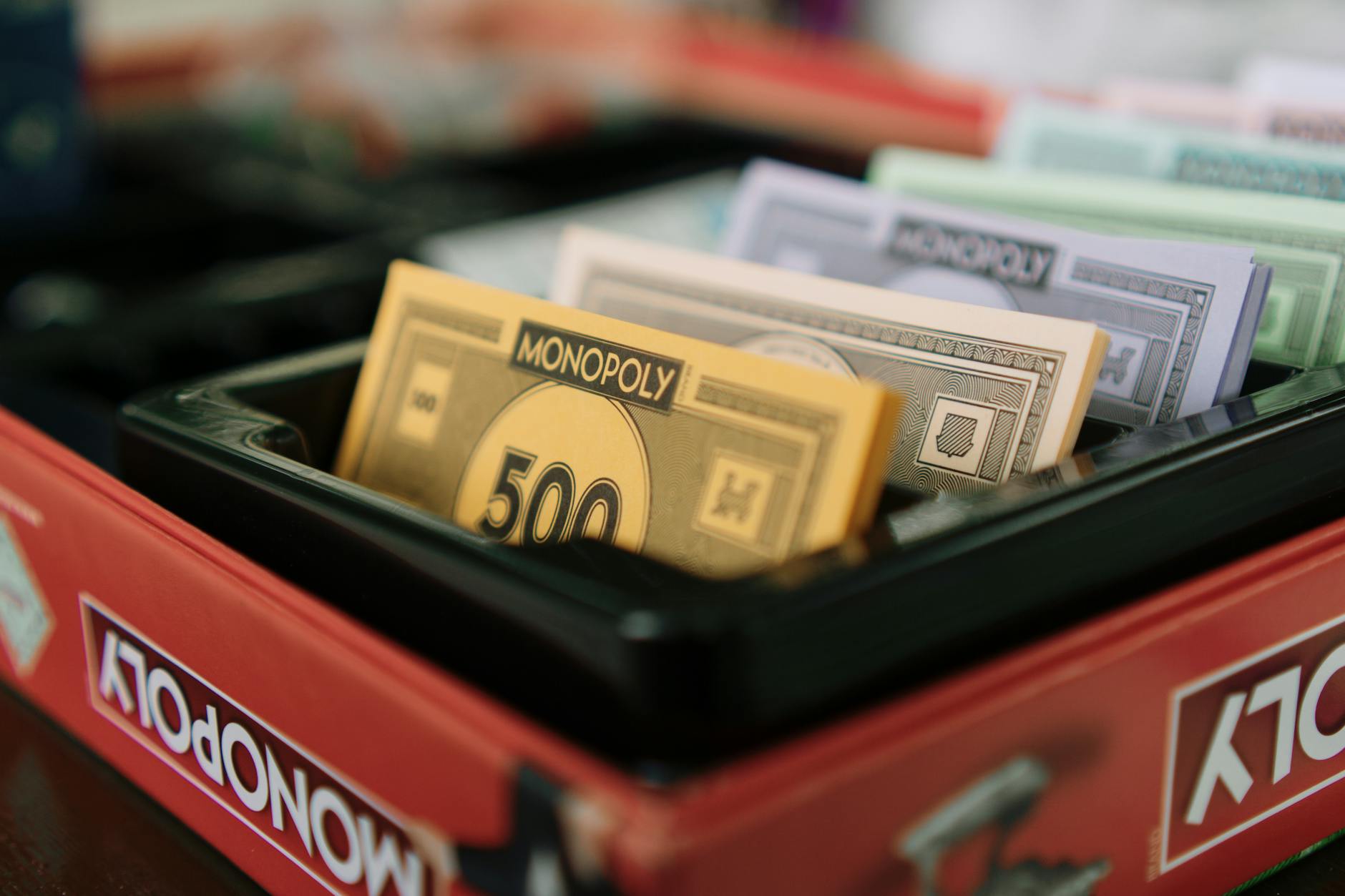
Scopely's MONOPOLY GO has done over $3 billion in player spend since launch. Almost all of it traces back to one mechanic: timed sticker albums. Six to ten albums per year, each requiring increasingly rare stickers, each gating completion behind 1–2 ultra-rare "gold stickers" that drop at sub-1% rates.
Most players don't realize how much trading saves them. The casual MONOPOLY GO experience can be a $5–$20-per-album hobby. The non-trading completionist experience is a $1,000+-per-album spend. The math is what determines which experience you have. For broader genre context, our guide to gacha math covers expected value across the casual category.
How sticker drops work
You earn stickers by opening packs. Packs cost dice (the game's energy currency). Stickers come in five rarity tiers:
~60% drop weight1-star (common)
~25%2-star
~10%3-star
~3%4-star
~1.5%5-star (rare)
~0.4%Gold sticker (album-locked)
Three nuances that matter. First, drop rates inside packs are pack-tier dependent — a 4-pack only drops 1- and 2-stars. Higher-tier packs (golden, emerald, blue) include the rare tiers. Buying upgraded packs is mandatory for completion-focused players.
Second, gold sticker drop rates aren't uniform. Some albums have 1 gold per album. Some have 2. Some albums have golds at 0.4% drop. Recent harder albums (the Tycoon Racing tier) have golds at 0.15% — roughly 3x rarer.
Third, every pack has duplicate protection on lower tiers but not on golds. You can pull the same gold twice. Duplicates are tradeable, which is where everything gets interesting.
Solo completion cost (no trading)
For an album with 1 gold sticker at 0.4% drop:
- Average packs to first gold: ~250
- One pack costs ~50 dice rolls
- One dice roll costs $0.01–$0.05 depending on bundle
- Average solo cost per album: ~$125–$625
- Worst-case (90th percentile): ~$1,000+
For an album with 2 golds at 0.4% drop, double those numbers: $300–$2,000+ to solo-complete.
And these are the friendly albums. The Tycoon Racing-era albums (golds at 0.15%) have solo-completion costs in the $3,000–$8,000 range. Almost no player solo-completes these. Even whales don't.
What trading actually does to the math
Trading drops your average completion cost by ~95%. Here's why:
You and a trading partner each play the album. Each of you pulls duplicate stickers (1-stars, 2-stars, 3-stars) constantly — duplicates are 80% of all pulls. You trade your duplicates that they need for their duplicates that you need. Both of you finish the bottom 4 tiers without spending extra.
The gold sticker is where it gets interesting. If trading your 4-star and 5-star duplicates speeds your friend's progress, they'll eventually pull a duplicate gold and trade it to you. You pull a gold for them. The net effect: two players completing for the cost of one player's pulls each, plus duplicate stickers that were going to waste anyway.
Result: a $300 solo album becomes a $20 album with one good trading partner. A $1,000 album becomes $50.
Which stickers are even tradeable
This is where Scopely tilts the design. 1-, 2-, 3-star stickers are tradeable. 4- and 5-star stickers are tradeable but limited to 5 trades per day. Gold stickers are usually NOT tradeable — Scopely wants those to drive spending.
The exceptions:
- During specific event periods (typically the last 48 hours before album expiry), Scopely temporarily makes select golds tradeable.
- The "Golden Blitz" events (3–4 per year) explicitly let you trade specific golds for ~12-hour windows. These are scheduled and announced.
- VIP-tier players with the highest play streaks occasionally get bonus trade-window access.
The implication: time your gold acquisition to the trade-window events. Pull as many high-tier packs as you can save dice for during these windows. The 12-hour Golden Blitz is when most album completions actually happen.
Finding trading partners
The official MONOPOLY GO Discord, the r/MonopolyGoTrading subreddit, and the r/Monopoly_GO general community are where serious players meet. The pattern that works:
- Find a partner with a similar play schedule. Trading benefits compound when both players are pulling actively at the same time. Different time zones with non-overlapping play hours dilute the benefit.
- Cultivate 3 partners, not 30. Trade limits cap how many trades you can do per day. Three reliable partners hit the limits more efficiently than a network of casual contacts.
- Establish norms early. Some traders trade 1-for-1 always. Others trade based on relative rarity. Pick a partner whose norms match yours; mismatches kill long-term trading relationships fast.
- Trade duplicates daily. Don't hoard duplicates waiting for the perfect trade — every duplicate held is value sitting idle. Trade what you have, when you have it.
The tournament strategy
MONOPOLY GO runs constant tournaments — racing tournaments, partner events, solo events. Tournament rewards include sticker packs, gold-tier sticker chances, and the rare "Free Gold Sticker" tournament reward.
The arbitrage: the top 50 players in any tournament earn substantially more sticker rewards than ranks 51–500. Hitting top 50 is doable in a focused 2-hour session if you've banked dice. Most casual players don't push tournaments because they don't realize the reward asymmetry.
The math: focusing on hitting top-50 in two tournaments per album cycle yields ~30% of the album's rare stickers as tournament rewards alone. That's stickers you would otherwise have spent dice (= dollars) to acquire.
The dice-saving meta
Some players grind dice constantly. Better players grind dice strategically:
- Save dice for partner events. Partner events offer the best dice-to-reward ratio in the game. Spending dice during them yields 2–3x the rewards of spending the same dice randomly.
- Stockpile during "slow" album weeks. Album cycles have intense first weeks (maximum reward density), midweek slumps (lowest density), and final weeks (urgency-driven event spam). Stockpile dice during midweek; deploy in event windows.
- Use the morning energy refresh strategically. Free dice refill at midnight (server time) and again at noon. Don't use up your dice before the next refresh — dice cap at 100, so playing past 100 wastes the upcoming free refresh.
Should you even play this game
MONOPOLY GO is genuinely fun if you're in the casual lane. Free play is enjoyable. Albums you partial-complete are fun social experiences. Tournaments are good 30-minute sessions.
It's a financial mistake if you're a completionist who can't tolerate incomplete albums. The combination of gold-sticker rarity + completion FOMO + limited trading windows turns this game into a $1,000+/year hobby for the unprepared.
If you want a less wallet-aggressive collection-style game with similar dopamine, our browser-based Memory Pairs nails the discovery-and-collection feedback loop without the album pressure. Free, instant, played in your browser tab.
For more on how casual gacha games work, the full gacha math pillar covers the broader category. Coin Master and Marvel Snap operate on different rules — both significantly less aggressive than MONOPOLY GO's sticker albums.

Start the conversation
Thoughtful disagreement welcomed. Promotional links quietly removed.