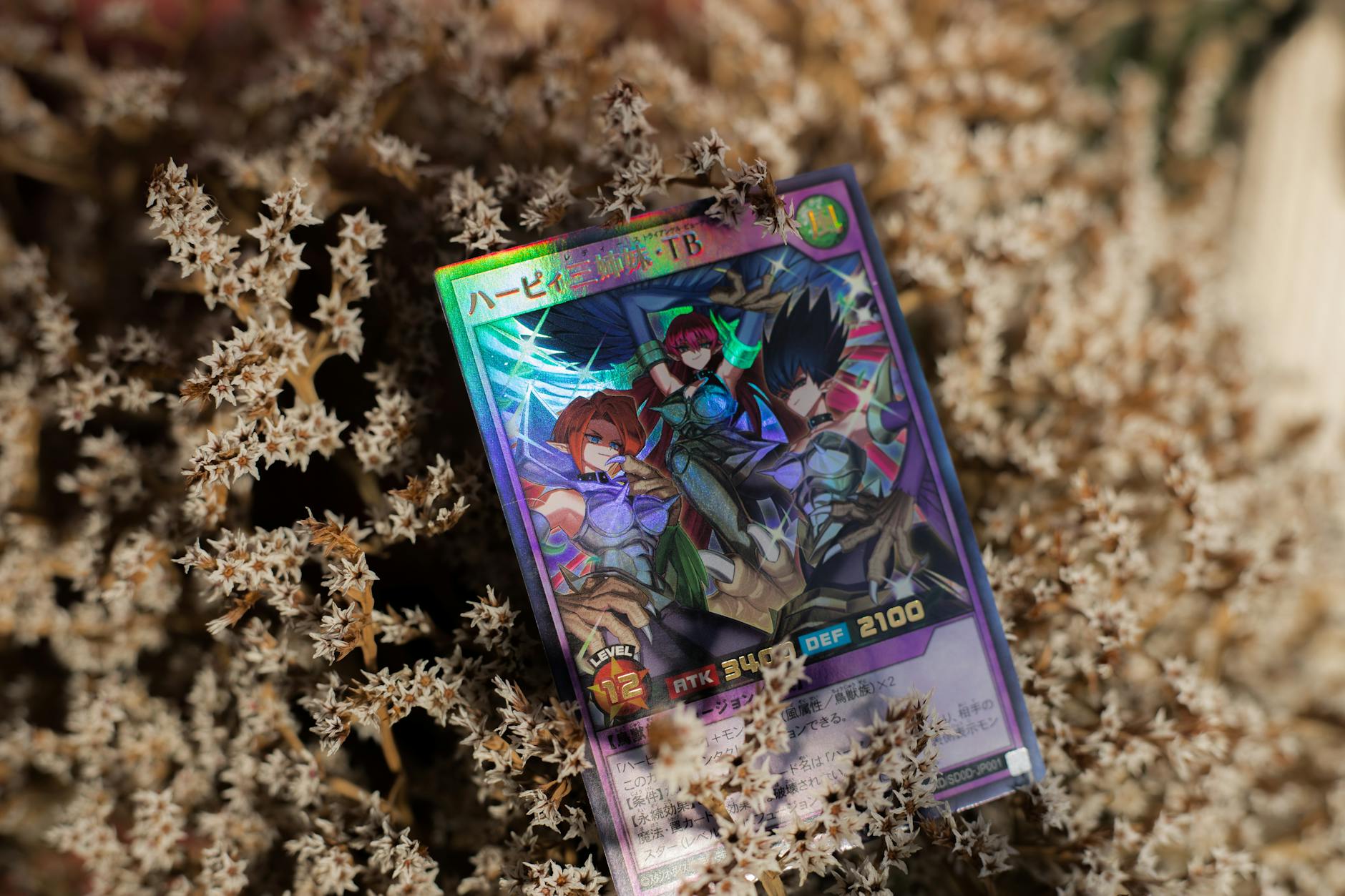
Gacha is the polite word. The mechanic is a slot machine with anime characters, animated stickers, or trading cards instead of cherries and sevens. You spend currency — sometimes earned, sometimes purchased — for a randomized pull. Most pulls give you junk. A small fraction give you the rare thing you actually wanted.
This isn't a moral take. Gacha is responsible for north of 40% of all mobile game revenue globally — bigger than every other monetization mechanic combined — because it works. The math is what's worth understanding. If you're going to participate, participating intelligently means knowing exactly how much your shot at the rare item is going to cost you, statistically, before you start spending.
The two structural variants
Mobile gacha breaks into two categories with very different math.
Hard-pity gacha guarantees the rare item after a fixed number of pulls. Genshin Impact's 5-star limited banner has a hard pity at 90 pulls. If you've pulled 89 times without a 5-star, your 90th pull will be one. This caps the worst-case spend.
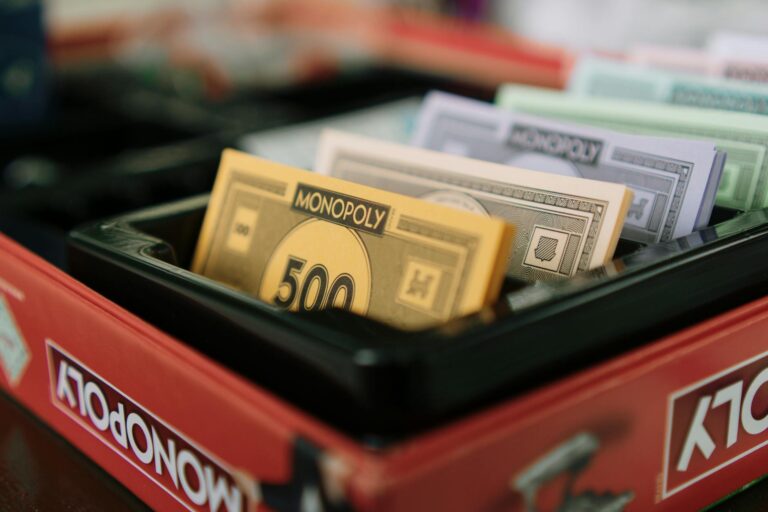
Soft-pity / no-pity gacha is pure probability. MONOPOLY GO's sticker drops, Coin Master's chest pulls, and most Western collection games operate on flat per-pull probabilities with no guarantees. You can pull 500 times and still not get the rare. The math gets brutal fast.
Expected value, simplified
Expected value (EV) is the average outcome of a probabilistic event over infinite trials. For a gacha pull, EV tells you the average number of pulls needed to get a target item, and from there, the average dollar cost.
~20 pulls5% drop rate — average pulls to one
~100 pulls1% drop rate — average pulls to one
~167 pulls without pity0.6% drop rate (Genshin 5-star)
~1,000 pulls0.1% drop rate (mythic stickers)
Two notes that matter. First: average means half of all players get it sooner, half get it later. The standard deviation on these distributions is large. Half of players who pursue a 1% item get it in fewer than 70 pulls. The other half need more than 100. Some need 400+. Your individual run is a sample, not the average.
Second: with a hard pity, the worst case is bounded. Without one, the worst case is infinity. This is mathematically true and emotionally relevant. Coin Master and MONOPOLY GO players who hit 800-pull dry streaks aren't unlucky — they're the predicted tail of a no-pity distribution.
MONOPOLY GO — sticker albums, the modern frontier
Scopely's MONOPOLY GO has done over $3 billion in revenue since launch. Almost all of it comes from one mechanic: timed sticker albums. You collect 4-star stickers easily, 5-star stickers occasionally, and 1–2 "gold" stickers per album that drop at sub-1% rates and gate album completion.
The completion math without trading is brutal. Solo-completing an album to the gold sticker tier requires, on average, opening 4,000+ packs. A pack costs ~50 dice rolls. A roll costs roughly $0.01 to $0.05 depending on bundle. Worst case: $1,000+ per album for a hardcore completionist.
This is where trading saves you. Our MONOPOLY GO sticker guide covers the trading-community workflows, partner selection, and the math on which stickers are tradeable vs. locked. Smart players never solo-grind golds — they trade duplicates with partners they've cultivated since launch.
Coin Master — the village strategy gacha
Moon Active's Coin Master is the longest-running mobile gacha in the casual category, in soft launch since 2010 and still pulling $100M+ a month. The pull mechanic is opening chests for cards needed to complete sets, with sets unlocking pet upgrades, village stars, and progression.
The trick: card drops scale with village level. Higher villages drop higher-tier cards. Low villages drop common cards but more of them. Strategic players push villages 1–80 fast, then slow-roll the high villages where rare cards become accessible. Our village 100+ guide covers the chest-event timing that maximizes rare-card pulls.
Marvel Snap — the rare gacha that respects your wallet
Second Dinner's Marvel Snap has the most pro-consumer gacha system in mobile. Spotlight Caches let you pick which 4 of the rotating featured cards you want before opening — three rolls give you three of the four. No infinite-pull loops. No 0.1% drop rates. Cards are fair to acquire if you play consistently.
This is unusual because Marvel Snap launched in 2022 from a studio (Second Dinner) staffed by ex-Hearthstone designers who deliberately rejected the Genshin/Coin Master model. The studio ships clear pull rates, hard-bounded acquisition costs, and no premium-currency-only cards. It's still pulling massive revenue. The model works.
If you want a deeper read on how the deck-meta has evolved around this acquisition model, our Marvel Snap mobile decks guide covers the current top tier.
Genshin Impact mobile — the textbook hard-pity gacha
Hoyoverse's Genshin is the example everyone in the industry studies. A featured 5-star banner has:
- 0.6% base 5-star rate
- Soft pity starting at pull 73 (rate climbs to ~30%)
- Hard pity at pull 90 (guaranteed)
- 50/50 system: a 5-star is the featured character or one of the standard pool
- Lose-the-50/50 guarantee: next 5-star is guaranteed featured
Translated: the worst-case spend to get a specific featured character is 180 pulls (lose the 50/50, then guarantee). At ~$1.30 per pull (efficient bulk), that's ~$235 worst-case. At average pull cost (~$2 per pull through inefficient bundles), it's ~$360.
Free-to-play Genshin players accumulate ~80 pulls per 6-week patch by completing the daily commission, exploration, and event content. Our daily commission optimization guide covers the 12-minute routine that hits weekly soft caps with the least time investment.
When spending actually makes sense
This is the section nobody writes honestly. Sometimes it does make sense. The framework:
Spend if: you'd happily pay the same amount for a console game (~$60 for an experience that lasts 50+ hours), and the gacha character/sticker/card unlocks 50+ hours of gameplay you'd otherwise miss. A $30 starter pack on a game you're going to play for six months is genuinely a good deal compared to a $60 game you finish in 12 hours.
Don't spend if: you're chasing FOMO on a limited-time character, you've already missed the optimal-spend window (mid-banner is always worse value than the launch-week bundle), or you're planning to dust off the game in two weeks. Limited-time pressure is the single largest predictor of regretted spend.
Set a hard ceiling before pulling. The casino industry calls this "loss limits." The mobile gaming industry doesn't, because no major publisher voluntarily reminds players to budget. The trick: decide the maximum number of pulls before you start. Stick to it absolutely. If you don't get the item by the ceiling, you don't get the item this banner.
The dark patterns to actually watch for
- Buried drop rates. Rates are required to be disclosed in China and Japan. They're not federally required in the US. Always check the in-game banner details — anything that doesn't show specific percentages is gambling on faith.
- Bait pulls. The first 10x pull on a new banner often has slightly elevated rates. The next 10x often has the worst dry-pity probability. Designers tune this to encourage continuation.
- Bundle escalation. The starter pack at $1.99 is good value. The $9.99 "best deal" is okay. The $99 "ultimate package" is almost never worth it on a per-resource basis. The pricing curve is intentionally non-linear so the big bundle looks like better value but isn't.
- Exclusive event currencies. When a banner uses a separate currency you can't carry to the next banner, you're forced to spend or waste — and waste feels worse than spend, so most players spend.
The ethical question
Gacha is gambling. The Belgian and Dutch governments have ruled it so, and several major publishers have removed gacha from their EU releases as a result. The industry's defense is that gacha rewards have no cash-out value, and most players spend nothing.
Both points are partially true. The industry's silence on the 1–2% of players who account for 50%+ of revenue — "whales" — is the part that's harder to defend. Most studios know exactly which accounts are exhibiting compulsive spending patterns and few intervene.
If you play, play with eyes open. Set a budget, understand the math, and remember that the games are designed by teams of behavioral economists who optimize for retention and revenue, not your weekend.
For a casual taste of the satisfying-pull feeling without the spend, our Memory Pairs browser game nails the dopamine loop without the wallet attached. Or browse our full free game library — all browser-native, all instant.

Start the conversation
Thoughtful disagreement welcomed. Promotional links quietly removed.